



Corporate Governance and Internal Control System
The establishment of an effective corporate governance and internal control system is essential for sustainable growth and long-term improvements in corporate value, and accordingly the Company works to strengthen such structures.
Corporate Governance and Internal Control Principles(266.9 KB)
Corporate Governance Report(1.1 MB)
Necessary Systems to Ensure Appropriate Operations and Status of Operation of the Systems(229.0 KB)
Corporate Governance
Basic Stance
A mechanism of corporate governance that enables management to make prompt and sound management decisions under appropriate and effective supervision is indispensable to the BIPROGY Group’s continuous growth and increase in medium- to-long-term corporate value. The Company shall create, maintain, and ceaselessly improve this mechanism.
Furthermore, in order to contribute to society as an enterprise resolving social issues, the Company stipulates as part of its corporate philosophy “Listen sincerely to our stakeholders to improve our corporate value” in order to create relationships of trust with all stakeholders, and shall proceed with its business activities in accordance with this principle.
Corporate Governance Structure
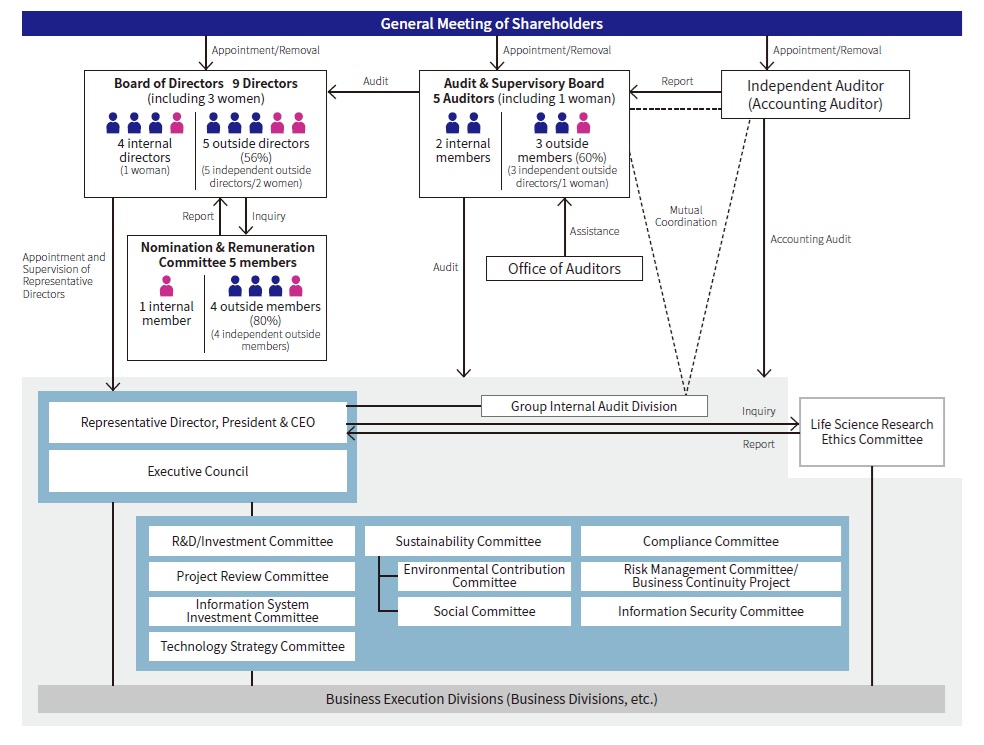
BIPROGY has determined that an audit system involving supervision by a Board of Directors that includes outside directors and auditing by outside auditors is effective for monitoring management, and thus has adopted an Audit & Supervisory Board structure.
Corporate Governance Structure (As of June 26, 2025)
1. Board of Directors
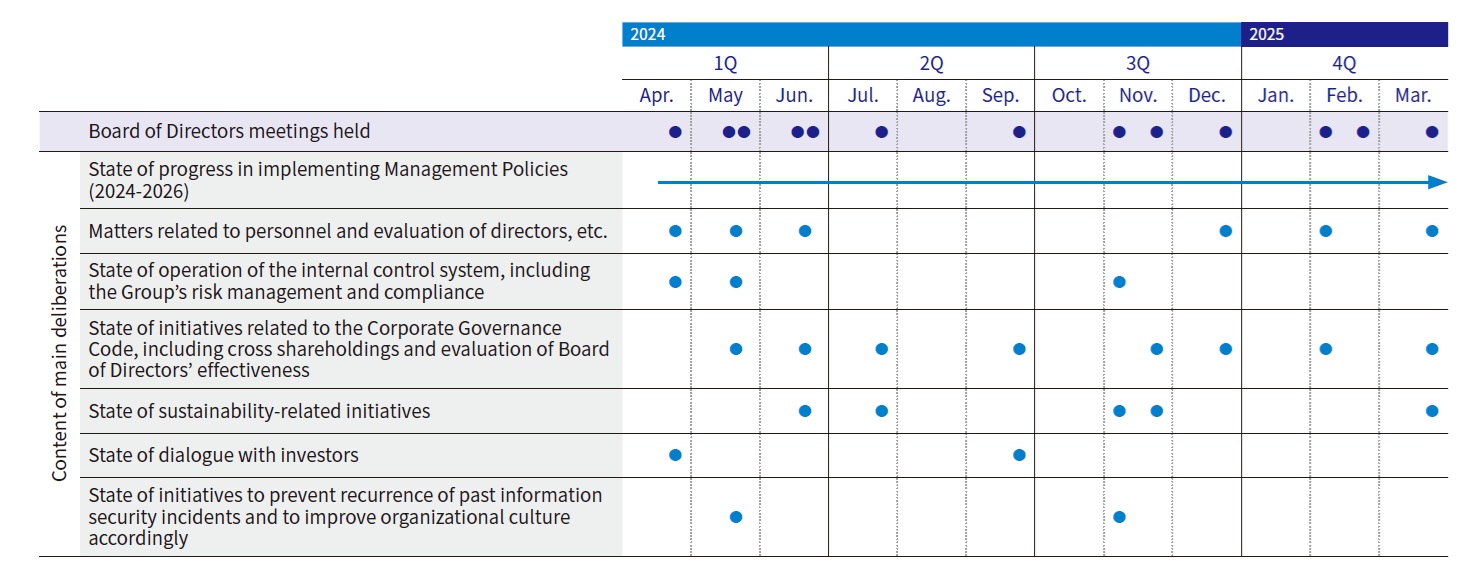
The Board of Directors generally meets once a month. In addition to deliberation and deciding on the Company’s basic management policies, important matters, etc., it supervises overall management, including execution of duties by directors and corporate officers. The term of directors is one year so as to establish a flexible management system that can respond to changes in the business environment and to clarify the management responsibilities of directors. The Board of Directors met 13 times in FY2024.
Content of main deliberations in FY2024
- State of progress in implementing Management Policies (2024-2026)
- Matters related to personnel, evaluation and remuneration of directors etc.
- State of operation of the internal control system, including the Group’s risk management and compliance
- State of initiatives related to the Corporate Governance Code, including cross-shareholdings and evaluation of Board of Directors effectiveness
- State of sustainability-related initiatives
- State of dialogue with investors
- State of initiatives to prevent recurrence of past information security incidents and to improve organizational culture accordingly
2. Audit & Supervisory Board
Audit & Supervisory Board members audit the execution of duties by directors and the internal control system through their attendance at all important meetings including Board of Directors meetings, the examination of the operational and financial status, and the exercise of their rights regarding appointments and dismissal of accounting auditors and audit compensation. In order to increase the effectiveness of Audit & Supervisory Board member audits and facilitate the execution of audit functions, the Office of Auditors (2 full-time employees) aids the execution of Audit & Supervisory Board member duties. The Audit & Supervisory Board met 16 times in FY2024.
Content of main deliberations in FY2024
- State of initiatives to reinforce compliance framework
- State of initiatives to reinforce internal control system
- State of initiatives to reinforce risk management
- State of initiatives to prevent misconduct, etc., or their recurrence
3. Nomination & Remuneration Committee
This advisory committee to the Board of Directors deliberates and reports on matters pertaining to personnel and remuneration of our directors and corporate officers. The attendance of independent outside directors and the agreement of all members, including independent outside directors, are required when passing resolutions. The committee met 10 times in FY2024.
Content of main deliberations in FY2024
- Matters concerning composition of the Board of Directors and Audit & Supervisory Board and expertise and experience required of directors and Audit & Supervisory Board members (skill matrix)
- Personnel proposals regarding director candidates and corporate officer candidates (including representative director, order of acting directors and corporate officers, performance evaluation, appropriateness of reappointment, and successor training plan, etc.)
- Bonus payment amount
- Issue and allotment of restricted stock
*The results of deliberations by the Nomination & Remuneration Committee are reported and submitted to the Board of Directors.
4. Group Internal Audit Division
This independent in-house body directly under the President was established to audit the effectiveness and efficiency of internal controls through the Group. It confirms and audits the state of activities of Group committees, divisions, and Group companies. It also submits reports on internal audit plans and audit results to the Board of Directors.
5. Executive Council
The council, which is composed of corporate officers concurrently serving as directors and members appointed by the President, is a decision-making body for material matters concerning business execution and ensures efficient decision-making. Moreover, Audit & Supervisory Board members are able to attend Executive Council meetings, and full-time auditors normally attend.
Various Other Committees:
Deliberate on individual management issues related to directors’ execution of duties from a practical point of view
|
6. R&D/Investment Committee
|
Deliberates on the advisability of plans for businesses, products and services based on the Group’s priority areas, and decides whether to invest in such plans. Also evaluates actual results versus forecasts for these plans and requests a review as necessary. |
|---|---|
|
7. Project Review Committee
|
Determines the business risks, the validity of countermeasures, and the possibility of implementation for important development and service businesses. Also evaluates actual results versus forecasts for such projects and requests a review as necessary. |
|
8.Information System Investment Committee
|
Deliberates on the advisability of cost, effectiveness, applied technologies and other matters for the Group’s own system development and operation and decides whether to invest in such systems. Also evaluates actual results versus forecasts for such plans and requests a review as necessary. |
|
9. Technology Strategy Committee
|
Determines the technology fields in which the Group should focus, discusses the validity of technology strategies and implementation plans for the acquisition, strengthening, and business application of those technologies, including development, investment, and utilization, and monitors those implementation plans. |
|
10. Sustainability Committee
|
Formulates measures and policies on achieving SDGs, determines the appropriateness of overall business activities from an ESG perspective, comprehensively determines action promotion and evaluations, and requests a review as necessary. |
|
11. Environmental Contribution Committee
|
Review response measures regarding environmental contributions, design mechanisms to promote environmental contributions, and perform management and oversight of their implementation. |
|
12. Social Committee
|
Consideration of policies on social fields, design of mechanisms to promote a social response and the management and supervision of the status of implementation, as well as other endeavors including corrective instructions on pending issues. |
| 13. Compliance Committee | Formulation and operation of the Group's compliance program, formulation of compliance promotion policies, analysis of cases involving compliance violations, investigation reports, and consideration of measures to prevent recurrence. |
|
14. Risk Management Committee /
Business Continuity Project
|
Addresses various risks that exert a material impact on Group management and ensures business continuity. |
|
15. Information Security Committee
|
Formulates strategies for overall Group security and personal information protection, andconsiders and promotes various measures based on those strategies. |
|
16. Life Science Research Ethics Committee
|
Examines the validity of human-subjects research performed by the Company from an ethical and scientific perspective through an independent organization, and requests reviews if necessary. |
Initiatives to Enhance Corporate Governance
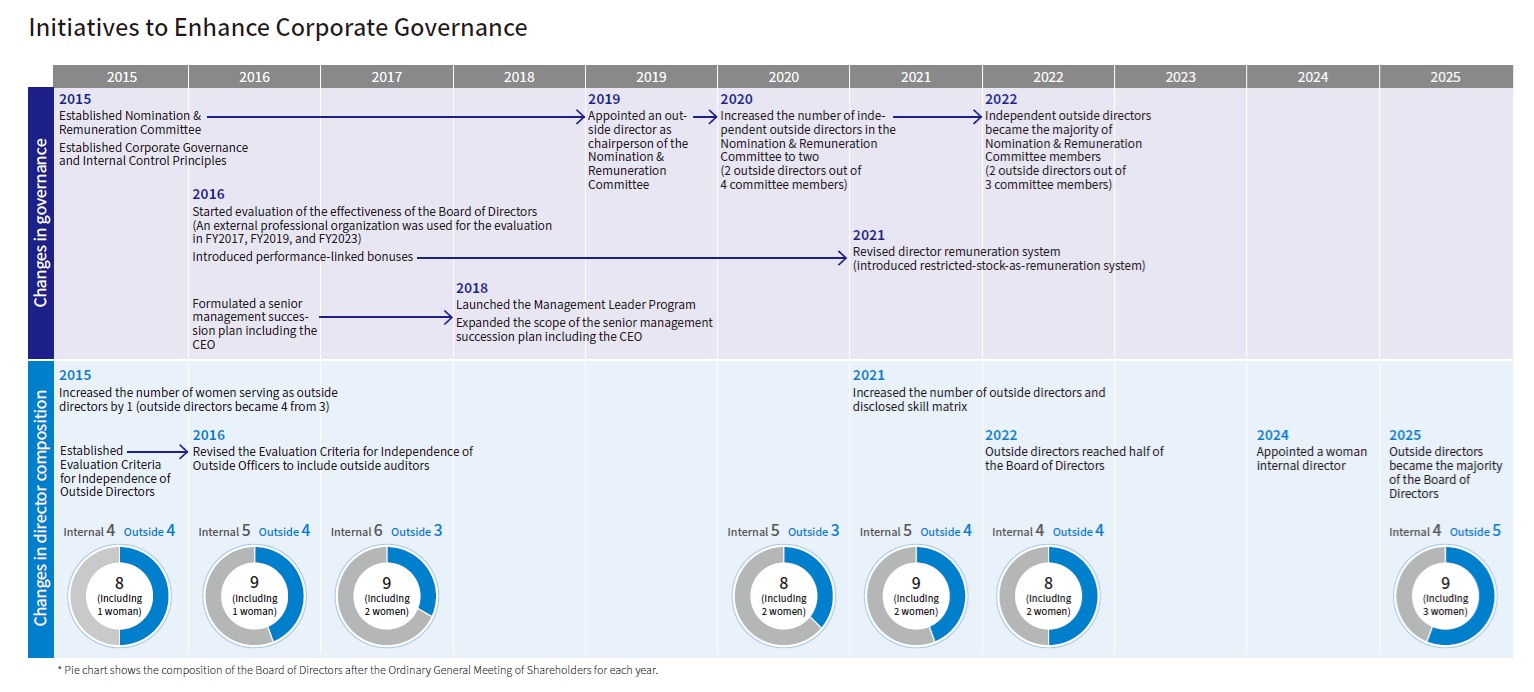
The BIPROGY Group ceaselessly improves on initiatives for enhancing corporate governance as a mechanism for implementing transparent, fair, prompt, and decisive decision making. To create business ecosystems, it is important to expand business opportunities through trust with a variety of stakeholders. Therefore, in addition to ensuring diversity of directors and Audit & Supervisory Board members, we also consider succession plans for rapid evolution a priority issue.
Changes in the corporate governance system
*Click on image for larger view.
Composition of Directors and Auditors, Skill Matrix
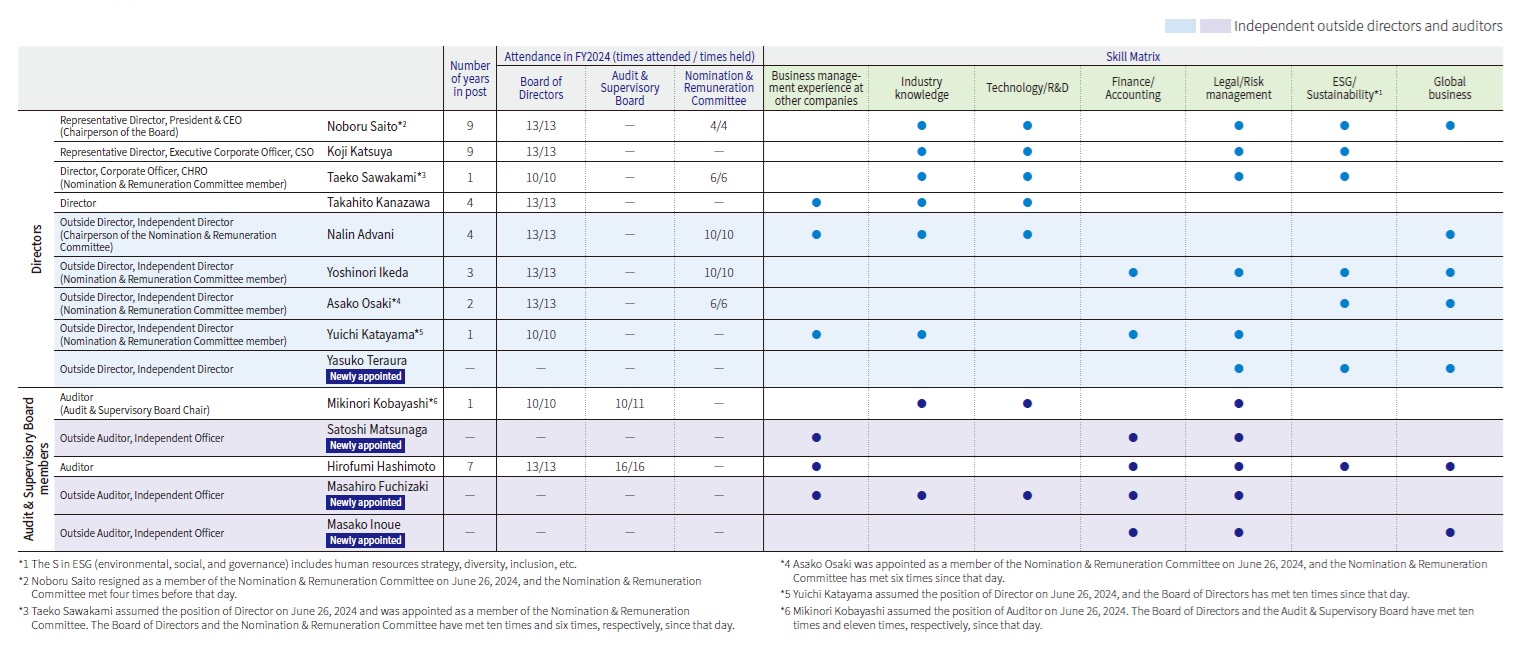
The Board of Directors consists of nine directors (including three female directors), with five of them being independent outside directors who bring diverse backgrounds, including advanced expertise and extensive experience and knowledge in venture investment, global business, international taxation, gender, ESG, legal, risk management, sustainability, and management. These independent outside directors account for the majority of the Board of Directors.
Skill Matrix
*Click on image for larger view.
Reasons for selecting items in the skill matrix
| Business management experience at other companies | Appropriate advice and supervision by outside directors who have management experience and achievements at other companies are effective in order to enable the management to transform the Company into a company that creates social value by making appropriate and prompt business judgements pursuant to the Management Policies (2024-2026) in the midst of the rapidly changing business environment. |
|---|---|
| Industry knowledge | A wealth of knowledge about the information service industry such as ICT and DX is essential for the Company to expand business ecosystems together with customers and partners under Management Policies (2024-2026). |
| Technology / R&D | As technology evolves rapidly, a wealth of knowledge and expertise about technologies and research including advanced technology is essential for the Company to expand business ecosystems together with customers and partners as stipulated in the Management Policies (2024-2026). |
| Finance / Accounting |
The Company needs directors well-versed in finance and accounting in order to achieve transparent and correct financial reporting, strong financial foundation, strategic investments for sustained enhancement of corporate value and capital policy with consideration to appropriate shareholders returns. |
| Legal / Risk management |
Risk management that enables appropriate and prompt responses to deal with diversified and complicated risks as well as strengthening corporate governance are indispensable in order to enable a medium- to long-term increase in corporate value. The Company needs a wealth of knowledge about these issues. |
| ESG/ Sustainability |
The Company needs a wealth of experience and expertise about efforts on climate change, workforce strategies, and promotions for ESG/sustainability issues such as diversity and inclusion in order to create a sustainable society as it aims under the Management Policies (2024-2026). |
| Global business |
Borderless perspectives are indispensable in order to expand business ecosystems together with customers and partners. Thus, the Company needs a wealth of knowledge about global business. |
State of Deliberations by the Board of Directors
Evaluation of Effectiveness of the Board of Directors
To continuously improve corporate value, we consider it important for the Board of Directors to enhance governance by sufficiently fulfilling its functions. Since the Board of Directors meeting in FY2015, we have worked to improve its functionality by conducting self-assessments by the Board of Directors.
In the FY2024, we conducted Non-anonymous questionnaire survey to all directors and auditors, including the following evaluation items, and after compiling the results internally, we had an outside consultant analyze them. Based on the results of such analysis, the Company deliberated and evaluated the current status of the Board of Directors and areas for improvement.
Board of Directors Effectiveness Evaluation Process
We have analyzed the responses after receiving answers to the following questionnaire from all directors and auditors who are members of the Board of Directors. Based on this analysis, the Board of Directors grasped and evaluated the current situation, deliberated on how the Board of Directors should be in the future, and decided on Actions for the Fiscal Year 2025.
| Respondents | all directors (8) and all auditors (5) |
|---|---|
| Response method |
onymous (71 questions in total) |
| Evaluation Items |
1. Management issues and role and function of Board of Directors |
Results of FY2024 evaluation and policies for FY2025
Evaluation results (summary)
As a result of discussion by the Board of Directors based on the results of the questionnaire, the rankings for the evaluation items were generally high, and the initiatives for our Actions for FY2024 were also recognized, as described below. However, there were the following points for improvement and other matters where initiatives are needed to further enhance the effectiveness of the Board of Directors, centering on the operating conditions of the Board of Directors and the configuration and roles of the Nomination and Remuneration Committee.
-
Currently, active discussions are taking place in the Board of Directors, but regarding the important management issues, particularly the items listed in the subsequent section “Actions to be taken in FY2025 (1),” further enrichment of discussions is necessary. While there is no need to change the basic roles and functions of the Board of Directors, it is necessary to devise agenda settings and secure time for discussions to thoroughly debate important themes with a sense of urgency.
-
Regarding successors for senior management, including the CEO, it is necessary to further advance measures to enhance the pipeline and ensure diversity, as well as to improve information sharing with those outside the committee members.
Status of efforts and evaluation results regarding the "Actions to be taken in FY2024"
-
To achieve deeper discussion regarding business strategies including allocation of management resources, technical strategies, human resources strategies (including the Succession Plan), risks, and other matters, we will make further improvements to the selection of topics for discussion by the Board of Directors and the conduct of discussions, further increase the use of opportunities outside Board of Directors meetings, and expand the information that is shared with outside directors.
⇒ Based on measures such as devising agendas, enhancing pre-briefings, and conducting on-site inspections, positive evaluations have been made. However, it is necessary to continue deepening discussions on business strategies, technology strategies, human resource strategies, and specific risks considering domestic and international social conditions, such as overseas strategies, and to devise ways to provide information ahead of time and set agendas conducive to such aims.
-
The Board of Directors will continue to effectively monitor initiatives aimed at reforming the organizational culture and instilling compliance and risk management awareness at the operational level to prevent severe incidents or accidents.
⇒Although there has been some progress with measures such as regular reporting and pre-briefings, it is necessary to enhance the effectiveness of monitoring by devising ways to provide information related to efforts to reform organizational culture and instill compliance and risk management awareness at the operational level.
Actions to Be Taken in FY2025
Based on the results of the above evaluation, in FY2025, we will work to further strengthen our governance structure by addressing the following.
- With our Vision 2030 in mind, we will prioritize the following key management issues and risks, deepen discussions both inside and outside the Board of Directors, and
continue efforts to enhance information sharing, set agendas throughout the year, and devise materials:
• Our areas of expertise considering medium- to long-term competitive conditions and market trends
• Evaluation and verification of the steady execution of business strategies
• Risk tolerance and risk mitigation measures in advancing investment strategies and overseas strategies
• Global strategy
• Human resource development and securing (including promoting diversity in the medium- to long-term management layer, succession plans for the CEO and other senior management)
• Medium- to long-term trends in technology and innovation considering changes in the external environment
• Strengthening group management in M&A and subsidiary establishment, including overseas - Enhance the effectiveness of monitoring by improving information provision related to efforts to reform organizational culture and instill compliance and risk management awareness at the operational level.
Succession Plan
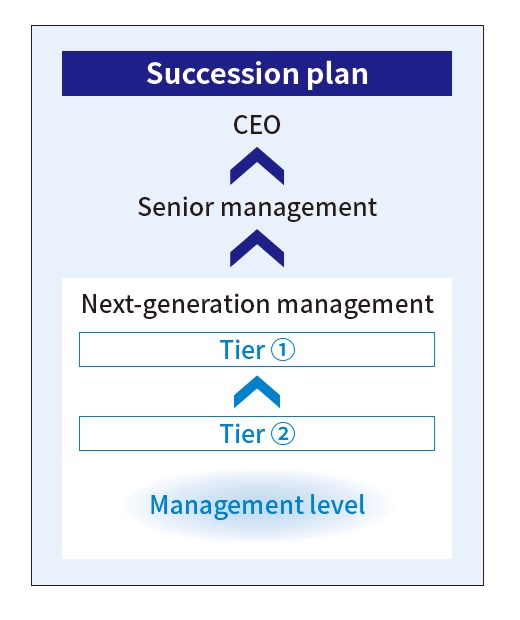
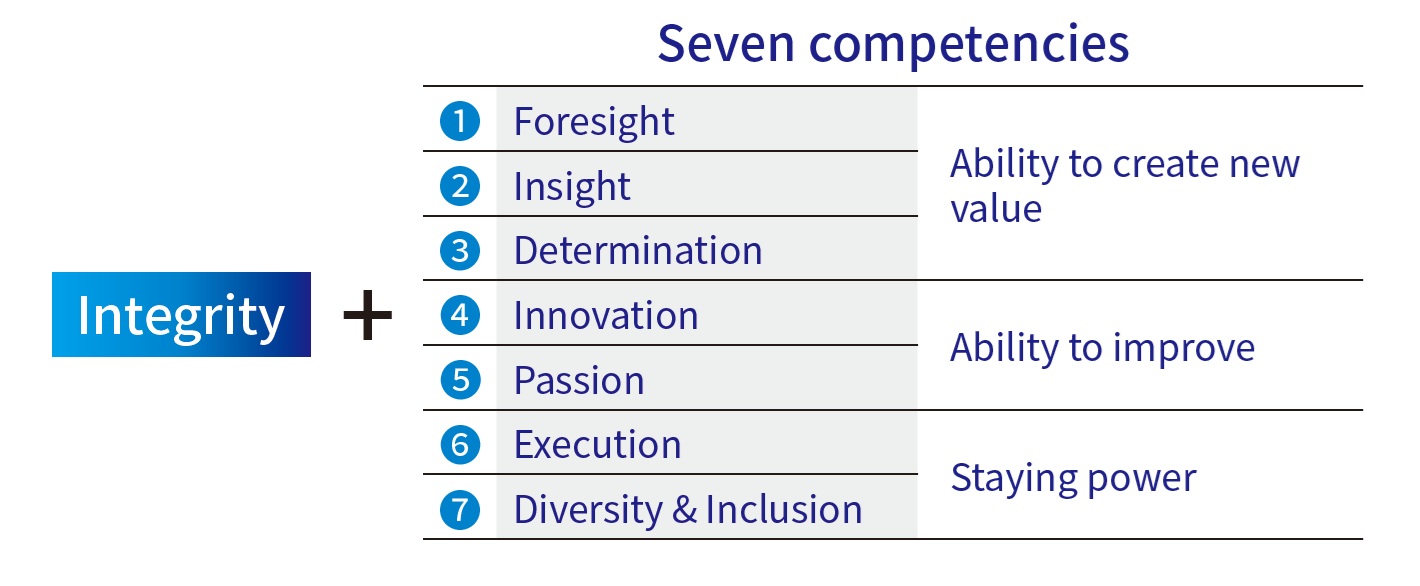
The Nomination and Remuneration Committee, which is chaired by an independent outside director, deliberates on the succession plans for management talent and reports on those deliberations to the Board of Directors in order to secure transparency in the selection process of members of senior management, including the CEO. In addition to integrity, a critical quality demanded of the CEO, the Group’s succession plan defines seven important competencies, including foresight and insight. We believe that the level of each competency demonstrated will vary depending on the business environment (whether the Company is in a period of transition/transformation, or one of extension and expansion. In addition, to strengthen the human resource pipeline for senior management succession candidates, we are focusing on developing next-generation management as a priority measure of our human resource strategy.
Qualities demand for management leaders
Ability to create new value
Foresight refers to the ability to foresee the future of the BIPROGY Group, promote a vision with great aspirations and make a commitment to the future. Insight refers to the ability to understand global trends and changes, identify developments in the Japanese economy, in other words societal swings, and perceive essential value in everything. Determination refers to the ability to decide on a direction with unwavering conviction despite unpredictable conditions and with an awareness of the risks involved.
Ability to Improve
Innovation refers to the power to improve, leaving precedent and custom behind to ambitiously carve out a new path undeterred by difficulties. Passion refers to the ability to gain the cooperation, trust, and encouragement from those around you while passionately engaging in all endeavors and communicating extensively. This also refers to such attributes as a high sensitivity toward information and receiving capabilities, as well as the ability to convey objectives in the direction of realizing dreams, goals to be achieved, and solving problems.
Staying power
Execution refers to the ability to steadfastly stay the course to achieve results by setting lofty goals companies should strive for and displaying leadership. Diversity and Inclusion refers to the ability to interact with a wide array of people whether inside or outside the Company, recognizing the values of people with various standpoints without stereotyping and pigeonholing them. This also refers to the ability to build proactive relationships based on an understanding of ideas from various corporate and cultural perspectives.
Developing next-generation management
The Group has been building a human resources pipeline under the succession plan to develop successors for senior management. In the Management Policies (2024-2026), we are promoting the development of next-generation management as a priority measure of our human resources strategy. Next-generation management refers to talent who possess a strong desire to improve the corporate value of the Group and will drive reforms with innovative ideas, energy and an exciting vision.
Since FY2018, we have been carrying out the Management Leadership Program as an open recruitment program to develop human resources to take charge of change. However, it had not yet been systematically operated and was not sufficiently linked to the strengthening or utilization of the human resource pipeline. Therefore, we redesigned the succession plan and launched a two-tier, selective training program in FY2024. A series of measures are systematically implemented, including the implementation of assessments (multi-faceted diagnosis and management knowledge diagnosis), coaching-led development accompanied by current senior management across departments, and tough assignments.
We have established four priority areas of development: foresight, innovation and reform, determination, and management mindset. These priority areas are based on the qualities required of a CEO, and are defined by focusing on the abilities that we believe are particularly important during times of transition and change in order to respond to rapid environmental changes and increasingly complex management issues.
By visualizing next-generation management and monitoring the successor candidate preparation rate, we will systematically and continuously produce successors for senior management.
Remuneration System
For remuneration for executive directors, if performance targets are fully met, the fixed remuneration, performancebased bonus (linked to profit attributable to owners of parent), and stock remuneration are paid in a ratio of 4:4:2.
Non-executive directors are paid only a fixed monthly salary that is not linked to performance to guarantee effective advising and monitoring of management. Policies for determining director remuneration calculation methods are set through deliberations by the Nomination & Remuneration Committee, an advisory committee of the Board of Directors, and subsequently approved by the Board of Directors.
Restricted stock remuneration tied to mediumto long-term and long-term performance
In FY2021, we introduced a remuneration system that incorporates both performance targets linked to medium- to long-term performance and long-term performance conditions that include actual response to sustainability issues such as climate change. The goal is to enhance corporate value in the medium- to long-term and strengthen the linkage between compensation and medium- to long term and long-term performance.
Illustration of executive director remuneration


The monthly remuneration for directors shall be no more than ¥35 million, and for Audit & Supervisory Board members no more than ¥8 million.

The total annual amount of bonuses for executive directors shall be no more than ¥400 million, and is determined by the Board of Directors in accordance with a standard amount by position and a standard coefficient based on profit attributable to owners of parent as determined by the Nomination & Remuneration Committee (for now, up to 0.5%).

The Company has adopted a restricted stock remuneration plan for executive directors, which incorporates three requirements and indicators: (i) tenure condition, (ii) medium- to long-term performance target (total shareholder return (TSR) growth rate versus TOPIX), and (iii) ESG targets. These are paid at a ratio of 3:1:2, respectively.
The tenure conditions in (i) are designed to have executive directors share
awareness and value with shareholders through share ownership. The performance indicator in (ii) is linked to medium- to long-term business performance, a comparative measure versus TOPIX of the degree to which we have independently increased our corporate value independently of overall market influence. The ESG indicators in (iii) function as guideposts to the realization of important issues that we are taking action on. The total annual amount of monetary claims for restricted stock remuneration shall be no more than ¥200 million per year (the total annual number of shares of common stock to be issued or disposed of in exchange for this compensation is limited to 66,000).
Total Remuneration in FY2023 for Directors and Audit & Supervisory Board Members with Subtotals for Each Type of Remuneration and Numbers of Recipients
| Classification | Total Remuneration Paid (Millions of yen) |
Remuneration Paid by Type (Millions of yen) | Recipients | ||
|---|---|---|---|---|---|
| a) Fixed Remuneration |
(b) Bonuses | (c) Stock Remuneration |
|||
| Directors (Excluding outside directors) |
333 | 146 | 13 | 53 | 5 |
| Audit & Supervisory Board members (Excluding outside auditors) |
57 | 57 | ー | ー | 3 |
| Outside directors and outside auditors |
64 | 64 | ー | ー | 8 |
1. Amounts listed are rounded down to the nearest million yen.
2. One non-executive director is not eligible for bonus and stock remuneration.
3. Auditors and outside directors are not eligible for bonus and stock remuneration.
4. The stock remuneration figures in the table on the left indicate the amounts recorded as costs for the fiscal year 2024 in the costs about restricted stock as remuneration granted to four executive directors.
5. The officer retirement benefit plan was cancelled as of June 30, 2006 as resolved at a meeting of Board of Directors convened on April 28, 2006.
6. The amount on the left includes the amount of remuneration, etc. paid to one executive director, one outside director, and one auditor who retired at the conclusion of the 80th Ordinary General Meeting of Shareholders held on June 26, 2024, during their terms of office.
Policy Regarding Constructive Dialogue with Shareholders and Other Investors
The Company’s President/CEO and CFO take the lead in conducting IR (investor relations) activities, so that timely and appropriate information is delivered to all shareholders and investors.
Please see below for details.
Corporate Governance and Internal Control Principles(265.9 KB)
Corporate Governance Report(898.1 KB)
Cross-Shareholdings
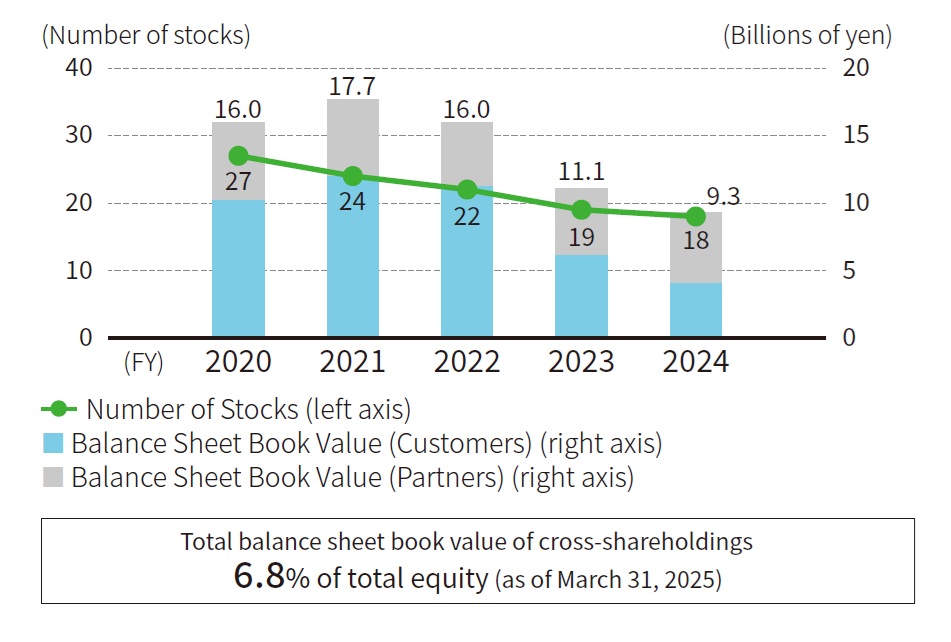
The Company may sometimes hold shares of its business partners, if they are found to contribute to the enhancement of the Company’s corporate value, such as leading to the expansion of its revenue base through maintaining or strengthening relationships with such business partners. The Company acquires such shares after adjudicating the appropriateness of acquiring them pursuant to its internal regulations. After acquiring the shares, the Company’s Board of Directors examines the appropriateness of holding such shares each year, and based on such examination, the Company proceeds the reduction of cross-shareholdings. As a result, the number of listed stocks held decreased by 1 stock from the end of the previous fiscal year to 18 stocks. The total amount of cross-shareholdings on the balance sheet was 6.8% of the total equity (March 31, 2023: 7.6%), and we will continue in the future to sell stocks where the significance in holding them has diminished.
The Company examines the appropriateness of each and every listed stock that it holds at Board of Directors meetings by taking into consideration purposes for holding, consistency with its business strategies and business related profits, etc.
If the counterparty of strategic shareholdings who holds BIPROGY shares indicates a desire to dispose of the shares they hold, BIPROGY will appropriately respond to the sale without ever trying to prevent the sale.
Verification results regarding stocks held as of March 31, 2025, at the Board of Directors meeting held in June 2025
-
The Company examined if the holdings of those stocks are still meaningful and in compliance with the business strategies from a mid-to-long-term perspective.
-
In addition, the Company examined the business related profits from the perspective of capital cost, and it confirmed that holding them is economically rational.
Number of Stocks Held by BIPROGY for Non-pure Investment Purposes and Total Value on Balance Sheet (listed companies)
Internal Control System
The Company group has strived to establish, operate and continuously improve its internal control system as follows in order to smoothly and effectively achieve the four aims of internal control. These aims are: “improving the effectiveness and efficiency of business”, “ensuring the reliability of financial reports”,“compliance with laws and regulations on business activities”, and “preservation of company assets”. The intention is to improve the efficiency and transparency of management and ensure the Company’s compliance with laws and regulations.
Improving the Effectiveness and Efficiency of Business
The Group has established a management policy and specific management targets, and strives to develop systems that will improve operational effectiveness and efficiency.
・The Group has established the business strategies and profit plans in order to achieve its management policy, and confirms and assesses the extent of progress against them at quarterly management reviews.
・Key matters on business execution are decided by the Executive Council and various committees, and authority is delegated to business divisions as appropriate in order to enable prompt business execution.
・The R&D/Investment Committee deliberates on and assesses the appropriateness of business plans about products/services and business investment such as capital participation in order to ensure the efficiency of investment pertaining thereto. Furthermore, the Project Review Committee deliberates on and assesses the appropriateness of implementation plans for material system service projects in order to ensure the profitability of service businesses.
Ensuring the Reliability of Financial Reports
The Company’s management and employees have conducted themselves in compliance with the basic policy for appropriate financial reporting established by the Group set forth for ensuring the reliability of financial reporting.
・The Company has established a department that implements the internal control of financial reports under the supervision of the Chief Financial Officer (CFO). It helps relevant departments to put internal control measures in place, and assesses the extent to which they have been implemented and how they are being run. The results of these assessments are reported by the relevant departments to management each time an assessment is conducted, so that management can confirm their efficacy. In an event that inadequacies are found, corrections are made promptly by the relevant department.
・The Group constantly keeps in mind the fact that appropriate financial reporting is a corporate social responsibility. It strives to enhance internal control through measures such as yearly e-learning training sessions (‘in order to properly understand internal control’) run by the department in charge of internal control.
Compliance with Laws and Regulations on Business Activities
In recognition of compliance as one of the most critical issues to execution of business operation, the Group has established the ‘Charter of Corporate Code’, the ‘Group Compliance Regulations’, and the ‘Group Code of Conduct’, based on which all of the Group’s employees act ethically in compliance with laws and regulations, social norms and internal regulations.
In order to insure these, the Group has established the ‘Compliance Committee’ to promote compliance programs under the supervision of the Chief Compliance Officer (CCO). Education and awareness activities are continually carried out in order to ensure that an awareness of compliance takes root and grows in all executives and regular employees of the Group through measures such as conducting elearning and training seminars.
Additionally, a communication route has been set up for reporting on and asking for advice on compliance matters, and the Compliance Committee and auditors have also established their own direct route (hotline) for reporting and consultation. Strict measures have also been put in place to make sure that hotline users are not retaliated.
Preservation of Company Assets (Risk Management)
The Group has established a ‘Risk Management Committee’ chaired by the Chief Risk Management Officer (CRMO) to unify, lead and manage risk management across the entire Group.
The Risk Management Committee has established a risk profiling in order to share and centralize the management of risks throughout the entire Group. The profiling currently has approx. 130 risk categories such as information management risks, system development risks, and disasters or accident related risks. Staff departments or committees responsible for controlling such risk items have established internal regulations to manage those risks as well as specific preventive measures and countermeasures in an event of a risk arising.
In an event of a material risk arising despite these measures, the organization where such risk arises or relevant committee promptly reports to the Risk Management Committee - Business Continuity Project. A Risk Response HQ is then established according to the severity of the risk in order to deal with the situation appropriately.
In the case of business continuity risks due to factors such as earthquakes or infectious diseases such as a novel strain of influenza, the Business Continuity Project Team headed by the CRMO develops a business continuity plan (BCP) and continuously reviews and improves its content while taking into account a range of viewpoints such as ensuring safety, restoring internal operations, and dealing with customers.
In the event of a crisis, the CRMO (the first in line to the chief of disaster countermeasures HQ for the main office) promptly establishes a disaster countermeasures HQ and commences business continuity support activities.
Regarding the Company’s systems to ensure the appropriateness of subsidiaries’ business operations, the Company appropriately and effectively manages its group companies through each department designated to manage each of such group company pursuant to its regulations for managing affiliated companies, while respecting each group company’s autonomy; the Company has established such regulations in order to improve the corporate value and ensure a sustainable growth of the Group by improving the management efficiency and sharing the Company’s corporate philosophy with each group company.
The Company supervises the business operations of directors of the subsidiaries and affiliated companies by dispatching the Company’s officers and employees to the subsidiaries and affiliated companies as the directors and auditors. Furthermore, we are advancing the review of related regulations and the consideration of governance policies to further strengthen the Group’s governance structure.